A Rainy Afternoon, Planned Around One Unhurried Activity
Choose a rainy afternoon activity that fits your mood, start with what you have at home and enjoy a satisfying pause without scheduling every hour.
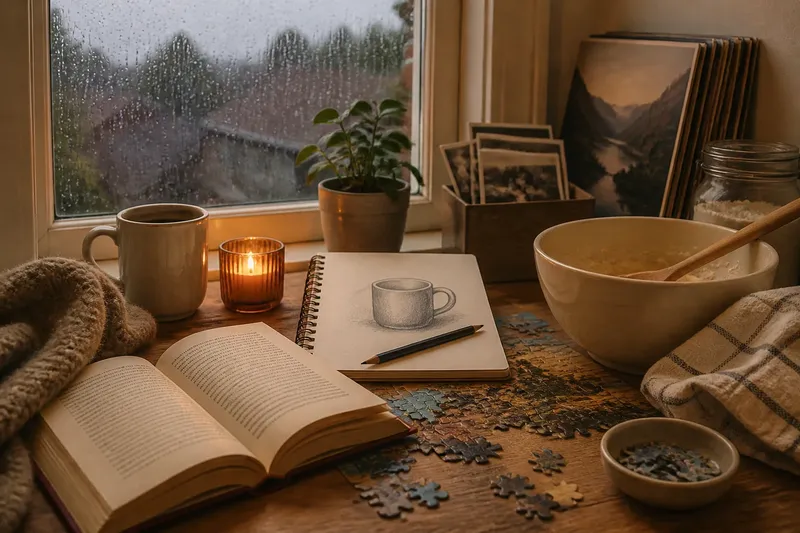
Rain taps the window, the afternoon is free, and choosing between a book, baking, drawing or a puzzle can take longer than beginning. A rainy afternoon activity is easier to enjoy when it fits your mood, available space and appetite for effort.
You do not need to account for every quiet moment. A little forethought can make it easier to begin, while still leaving room to stop, change course or simply rest.
Match the activity to your mood and space
Ask yourself what kind of attention sounds welcome. You might want to follow a story, use your hands, make something, or sit quietly with music. This quick check helps separate a tempting idea from one that suits the afternoon you actually have.
Then look at your energy and surroundings. A familiar novel may suit a tired mind; a quick sketch of a mug may help if you feel restless. If the kitchen table is occupied, choose something that fits on a tray rather than turning the afternoon into a clearing-up project.
Consider a few options that need only materials already at home:
- If a book is within reach and you want a quiet focus, read a chapter; if following a story feels tiring, switch to a familiar album.
- If you have a pencil and scrap paper and want to look closely, draw a mug or plant; if making marks feels frustrating, put the pencil aside and read instead.
- If the ingredients for a simple snack are available and you want to use your hands, prepare it; if cooking would create unwanted washing-up, choose a no-preparation snack.
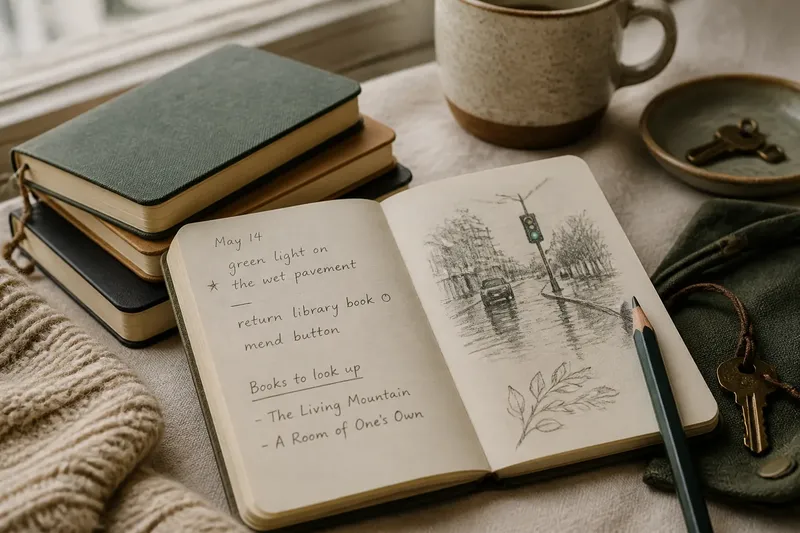
- If a loose button and needle are at hand and a small task sounds soothing, mend the button; if sewing feels fiddly, leave it for another day and listen to music.
- If a jigsaw is already out and you want a visual puzzle, place a few pieces; if the table needs to stay clear, choose a book or a small sketch.
- If you have photographs nearby and feel like looking back, sort a small stack; if that brings up more decisions than you want, return them to their place and choose a simpler activity.
Each choice asks for a different kind of attention. Pick the one whose effort feels inviting rather than the one that seems most impressive.
Say you feel fidgety, have a pencil and scrap paper, and do not want to start a large project. You draw the mug on the windowsill, looking at its handle and shadow; the expected result is a few marks on the page and a closer look at an everyday object. If your attention wanders, you can stop without leaving a substantial task unfinished.
Set a natural stopping point
Decide what would count as enough for now: the end of a chapter, one completed row of a puzzle or a cup of tea made and enjoyed. A stopping point is permission to pause, not a target you must meet.
Natural pauses make it easier to reassess. If you are absorbed when you reach one, carry on; if you are ready to stop, the activity has still had its place. For instance, “I’ll read until the end of this chapter” gives the session a shape without assigning the rest of the afternoon a job.
Make the first move easy
Gather only what the activity needs and put it where you plan to sit. For reading, that might be a book, a lamp and a drink; for drawing, paper, a pencil and an eraser. Bringing out supplies for several possible pastimes can make a simple choice feel like a project.
Make the setting comfortable in small, practical ways. Move a cup away from the edge of the table, put a cushion on your chair, or keep a cloth nearby if your activity might make a mess. Clear just enough room to begin.
Consider any interruption that matters. If a meal needs attention later, keep that in mind before settling in. Put your phone within reach if you need it for a particular reason, or out of sight if checking it tends to pull your attention away.
Start with the first action: open the book, sharpen the pencil, lay out the ingredients or put on the record. Once you have begun, let the activity set the pace. You can pause to stretch or look at the rain, then return to the next small action—or decide the session is over.
Let the rest of the afternoon stay flexible
When you reach a pause, resist the urge to add another project automatically. You might sit quietly, look out at the street or move to another room. If you want a second activity, choose it after the first has ended rather than treating it as the next item on a schedule.
Keep transitions light. Put away anything that could spill or be damaged, then stop; a book can return to the side table and pencils to a cup. Leisure does not need a full room reset to feel complete.
What should you do when a rainy afternoon plan does not fit?
How do you choose between several appealing activities?
Choose the option with the easiest beginning and the kind of attention you want. If two ideas still appeal, pick one and give it a natural stopping point, such as a chapter or a completed sketch.
What can you do without a ready-made hobby?
Use something ordinary already at home, such as a book, pencil, puzzle, recipe or album. A rainy afternoon does not require a named hobby or special equipment.
How long should you spend on one activity?
Let your comfort, the activity and your practical needs guide the session. A natural pause, waning attention or an approaching obligation can all be reasons to stop.
Is it fine to do nothing afterwards?
Yes. Resting without planning another pursuit can be a satisfying use of the time, not a sign that the afternoon has gone wrong.
Change course without turning leisure into a task
An activity that sounded appealing at first may feel wrong once you begin. If reading asks for more focus than you have, try listening to music or drawing for a while; if you are enjoying the book, keep reading beyond the chapter. A flexible choice can change with your mood.
Give the first idea a fair beginning before searching for another. If it still feels like a chore, put it aside and choose one available alternative. Moving from a novel to a jigsaw is a change of pastime; reorganising every shelf because you noticed one misplaced book is a separate job.
When you are ready to stop, put away anything that needs care. You need not rate the afternoon or produce something to justify it; an hour spent with a story, a sketch or music can be enough in itself.
If you want to make another rainy afternoon easier, remember which rainy afternoon activity suited you and what helped you start. Perhaps the chair by the window was comfortable, or a pencil and scrap paper were all you needed. Keep that detail as a useful cue, not a routine you must follow.